-
Recent Posts
Categories
Animals
Adelie Penguin Antarctic Fur Seal Arctic fox Arctic tern Baboon Bearded seal Black Browed Albatross Blue petrel Cape Petrel Chimpanzee Chinstrap Penguin Cod Crabeater Seal Elephant Seal Gentoo Penguin Giant Petrel Green Monkey Guillemot Harbour Seal hippopotamus Humpback Whale King Penguin Kittiwake Krill Leopard Seal Light Manteled Sootie Albatross Lizard Loggerhead turtle Minke Whale Musk ox Northern Fulmar Orca Polar bear Puffin Razorbill Red Colobus Reindeer Ringed Seal Rockhopper Penguin Shearwater Short-beaked common dolphin Skua Wandering Albatross Weddell Seal Wilsons Storm Petrel
Author Archives: admin
Icy Avarice
As I prepare for another season of working in Antarctica with the tourism industry it is hard not to reflect on how accessible this most remote of continents has become. No need to pack the ponies or push the pack of huskies onto the ship anymore, getting to Antarctica is relatively straight-forward these days. As a tourist you can choose from several companies offering trips in the Antarctic Peninsula and even beyond – you can even choose the level of luxurious add-ons that will make your trip more comfortable. And as a scientist, the days of ship-born visitation are fading … most national operators now adopt fly-in programs to open up the continent to science.
The isolation of Antarctica is being gradually eroded by human ingenuity – and now opportunities exist for people across the globe to view one of the most pristine and remote environments on the planet. However, easy access to Antarctica also means that the resources of the frozen continent are tantalizingly close. Several nations have recently made subtle changes to their goals regarding Antarctica (http://www.worldcrunch.com/led-russia-quiet-rush-may-be-antarcticas-resources/3999), and Russia has made it quite clear that the resources of Antarctica should be accurately assessed with a view towards future extraction (http://theconversation.edu.au/antarctic-visions-what-is-the-future-of-australias-forgotten-territory-2799).
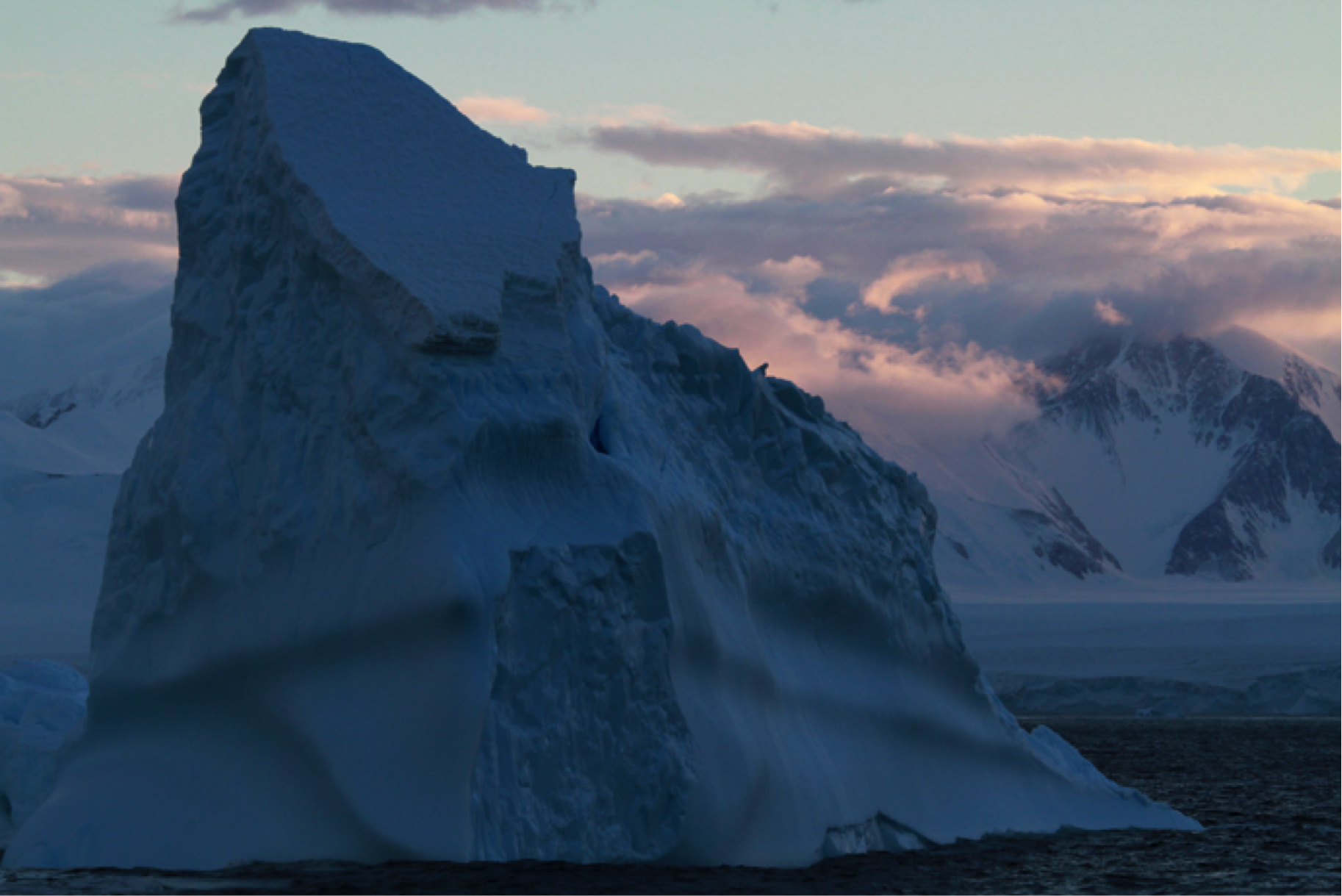 Antarctica has long been heralded as a reserve for peace and science. This is one of the few places on Earth where big business and industry are forgotten, where scientists and intrepid adventurers are able to sidestep the demands of modern society to observe wilderness in its most untouched form. To look “the wild” in the eye and see ourselves reflected there is something that changes a person’s perspective on the world and for many, leaves us with a drive to protect the last remaining wild places on the planet from the implacable advance of industry.
For me, the idea of opening up Antarctica to mineral exploitation is an indication of avarice winning out over common sense. Various political agreements make Antarctica a very special place in regards to politics – the continent (and its natural resources) is protected by international agreement that make it a showcase of cooperation in the interest of science, the environment and world peace. As the world reaches a population on 7 billion (http://7billionactions.org), everyone recognises the need to make sustainable decisions to safeguard the planet for future generations … digging up the non-renewable resources from the last untouched corners of the globe seems a very short sighted solution to ensuring our collective future.
Dredging the “undiscovered” oil from the Arctic has been justified in the interest of national security and the economy of the Nations fringing the Arctic Ocean – what could possibly be the justification for flinging away 50 years of conservation, peace and science in the Antarctic to blunt our avarice on the frozen rocks of the icy continent?
Posted in Conservation, Patrick in Antarctica
Leave a comment
Waving the white flag: the surrender of sea ice
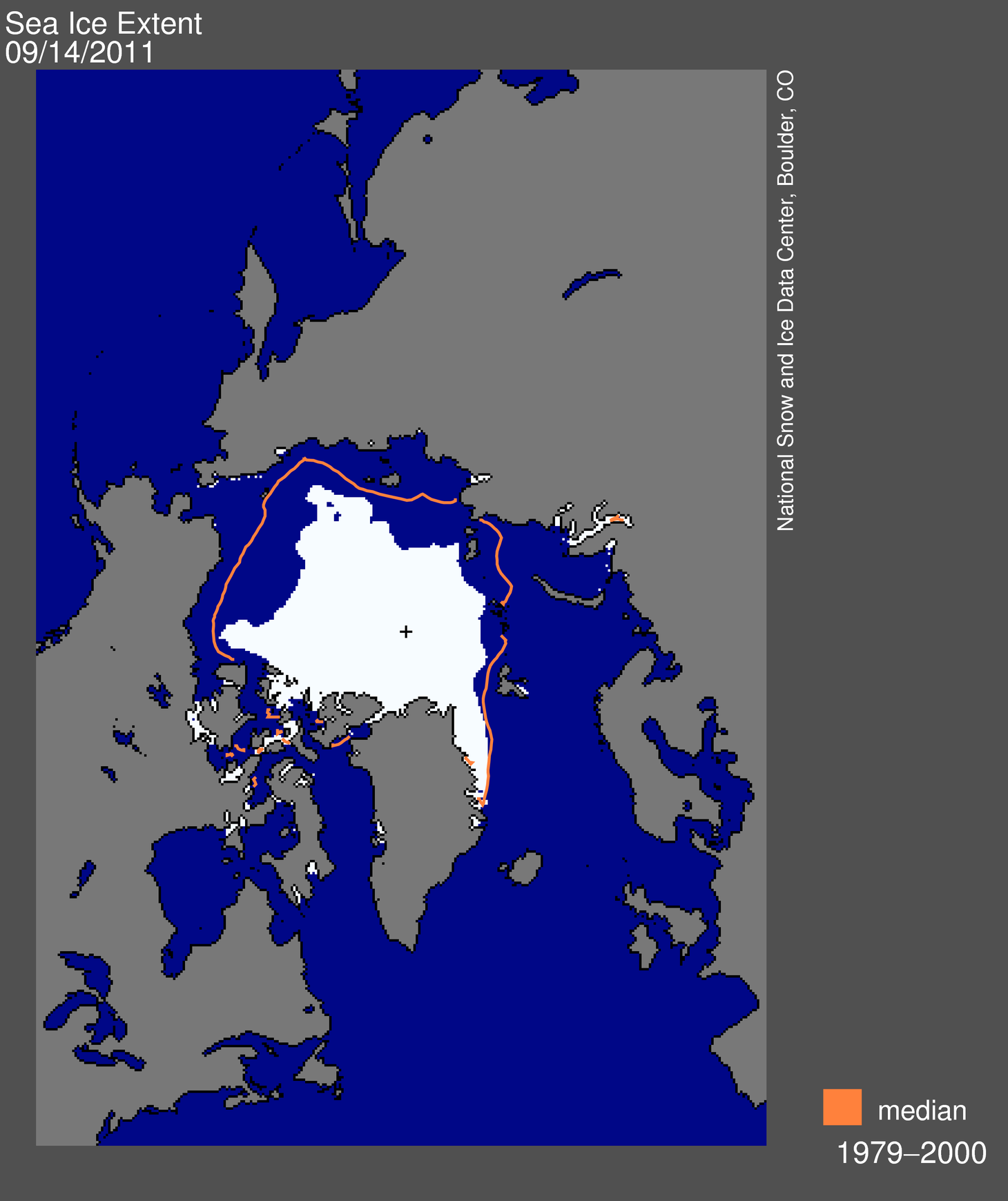
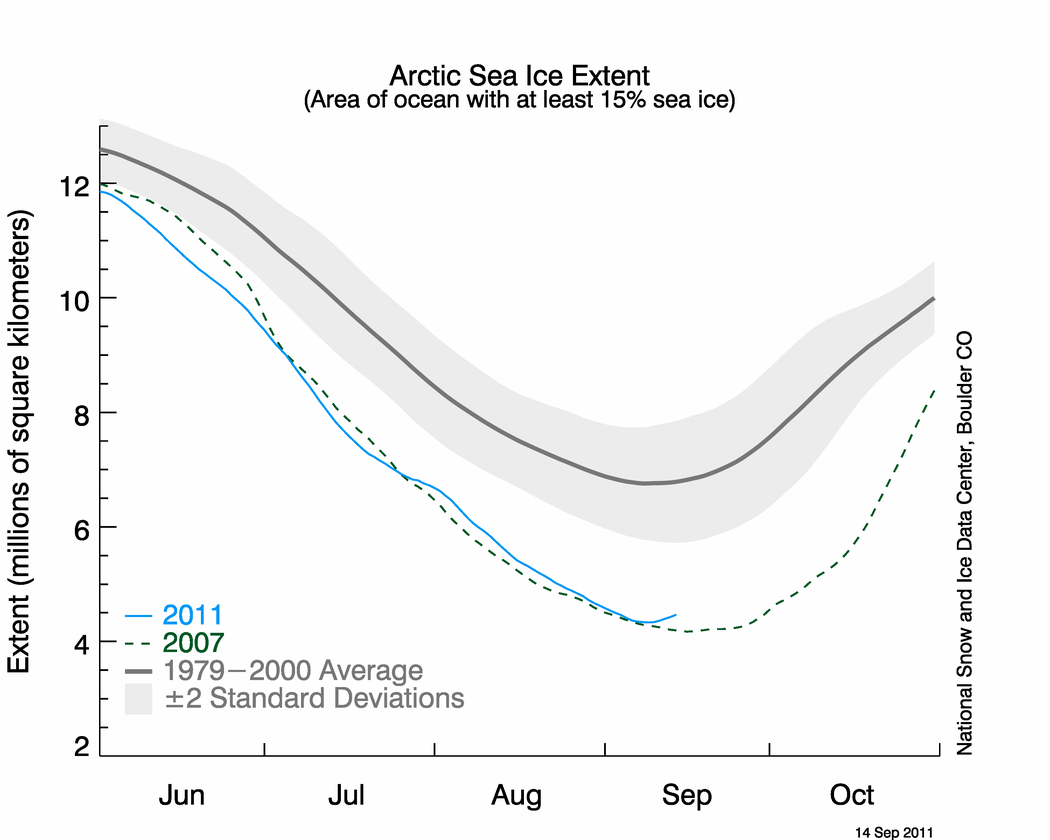
Despite the continued clucking of climate sceptics the sea ice in the Arctic is continuing to dwindle each year. Sea ice in the 2011 season represents the second-lowest summer ice extent since records began (http://www.bbc.co.uk/news/science-environment-14945773) and all signs indicate that this retreat will continue.
 Some are hailing the retreat as an opportunity – new shipping lanes are emerging and resources historically guarded by impenetrable ice are now opening up. Soon the millions of barrels of oil and gas locked beneath the Arctic seafloor will be ripe for the taking. Super tankers will be able to carry the precious fuel though the dwindling ice fields to western markets were we can pump this Arctic gift into our SUVs and trucks to burn. Some will wrinkle their noses as the fumes of Arctic oil scratch at their sinuses as the carbon escapes our exhausts to join the army of anthropogenic gases circling above our planet to continue the attack on the ice.
As the sea ice of the Arctic grows and shrinks with the seasons it seems a slowly flapping white flag signalling the surrender of the sea ice – an easy flag to ignore as it is well beyond the sight
of most of humanity …. and it gets a little smaller every year. But the surrender of the ice is seen by some eyes.
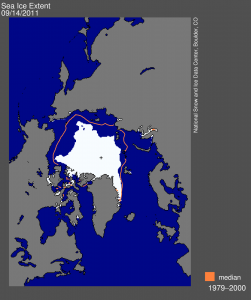
The Arctic is not entirely barren – indigenous people have called the frozen north home for thousands of years and to local communities the retreat of the ice represents the retreat of a lifestyle that defines them. The lost ice means that many of the animals that the Arctic people rely upon are also lost. Certainly, there are also opportunities that come in the wake of the retreating ice…. but what good is a fist full of oil stained cash when the larder is empty?
And, of course there are other less human eyes that see the retreating ice. Though comprehension may be beyond animals such as the polar bear and the walrus, the ice unravelling beneath their paws and their flippers may be flagging the end of their species. Many arctic animals depend upon ice as a platform for breeding or hunting in the short summers of the north. No ice may mean there is no future for many of the species we love to see in our BBC documentaries – a disappointment for many lounge chair naturalists certainly, but a disaster for the species involved.
For two in the blue the retreat of the ice may make our trip north next year a little easier, less ice means the way is clear to explore more of the amazing coastlines of Svalbard and Greenland. A thrill for us certainly, but ultimately a poor consolation prize. In a way it feels like we are joining the gold rush flocking north in the wake of the ice – joining the industrialists sailing north to seek their fortunes amidst the remnants of the ice. I only hope that we leave the Arctic a better place when we turn south again. We head north to records the surrender of the sea ice, and I hope that a few may listen to the cry for mercy.
Posted in Conservation
1 Comment
Autumn in the Arctic – time for a dive
The season is coming to a close here in the Arctic; the days are growing shorter, a bitter wind is whipping through the rigging of Widdershins and the faint threads of the Aurora Borealis can be seen in the skies some nights. Given the cooling weather, yours truly made sure to don a few extra layers underneath the dry suit yesterday before jumping into the water for a quick SCUBA dive.
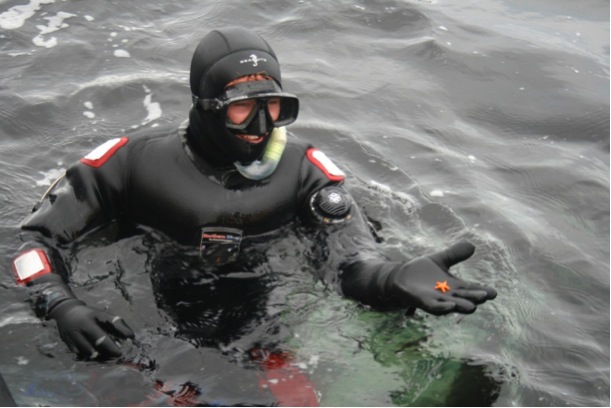 It’s actually been a while since the gear has seen the water and this was just a test dive to make sure all was working well – in a couple of weeks I’ll head south to do some real diving … but not too far south! Scotland will be by destination and I will soon be donning my dry suit in the lochs of the west coast with Graham Edgar, a renowned marine biologist from Australia. The aim is to familiarise myself with the ReefLife survey methodology: www.reeflifesurvey.com – this is a collaborative program between recreational divers and scientists that aims to collect marine biodiversity data from around the world.
Following a week of training we’ll be using the ReefLife survey methods to collect biodiversity data throughout our pole to pole journey – a continuous band of data to show which denizens of the deep are to be found in the shallow waters between one pole of the Earth and another. The program will see us diving in diverse environments from the sea ice in the Arctic to kelp forests and coral reefs near the equator. It will be a big project but a lot of fun and great contribution to our knowledge of the earth’s marine ecosystems.
Yesterday the dive was in shallow water where hermit crabs and starfish were clambering over the mussel shells lying beneath the hull of Widdershins … but before we finish our trips we will dive in some of the most spectacular dive locations on the planet and see some of the truly amazing denizens of the deep ….can’t wait!
Posted in Conservation, Norway
Leave a comment
On two sides of the sunset
After arriving in Tromsø I had to say goodbye to Patrick and Norway. All this exploration and fun was a great chance to break away from the desk for a while, but my PhD called me back to the world of science … thus I now sit in the warm Swiss sun while Patrick looks after Widdershins in the constant, but somewhat less powerful sun of the Arctic. While I dive into statistics and (epi)genetics, Patrick will start preparing the myriad of things that still need to be done before we can head further North next year.
 While sailing along the Norwegian coast we rarely had a chance to wear less than two pairs of trousers and about three jumpers under a wind- and water-proof jacket, and I had almost forgotten that June means summer for the rest of Europe. When I arrived back home in Zürich I almost fell over with heat-shock. Even though I arrived after 10pm the temperature was still over 25°C, hotter than it’s ever been during the whole trip! The second surprise was the sunset – it actually got dark over night, the first proper night since about two weeks! Up North the sun didn’t ever touch the horizon, it just kept going round and round forever. Patrick complains that the sun is stalking him as it circles the boat at night peeking through the windows to keep him from sleep…
Well, and now it’s almost two weeks since I’m back to workaday life. Of course analyzing my data statistically is not half the fun we had during our trip north, but it’s only ten more months until we start our big adventure.
Posted in Norway
Leave a comment
Hvale – Beauty and the Beef
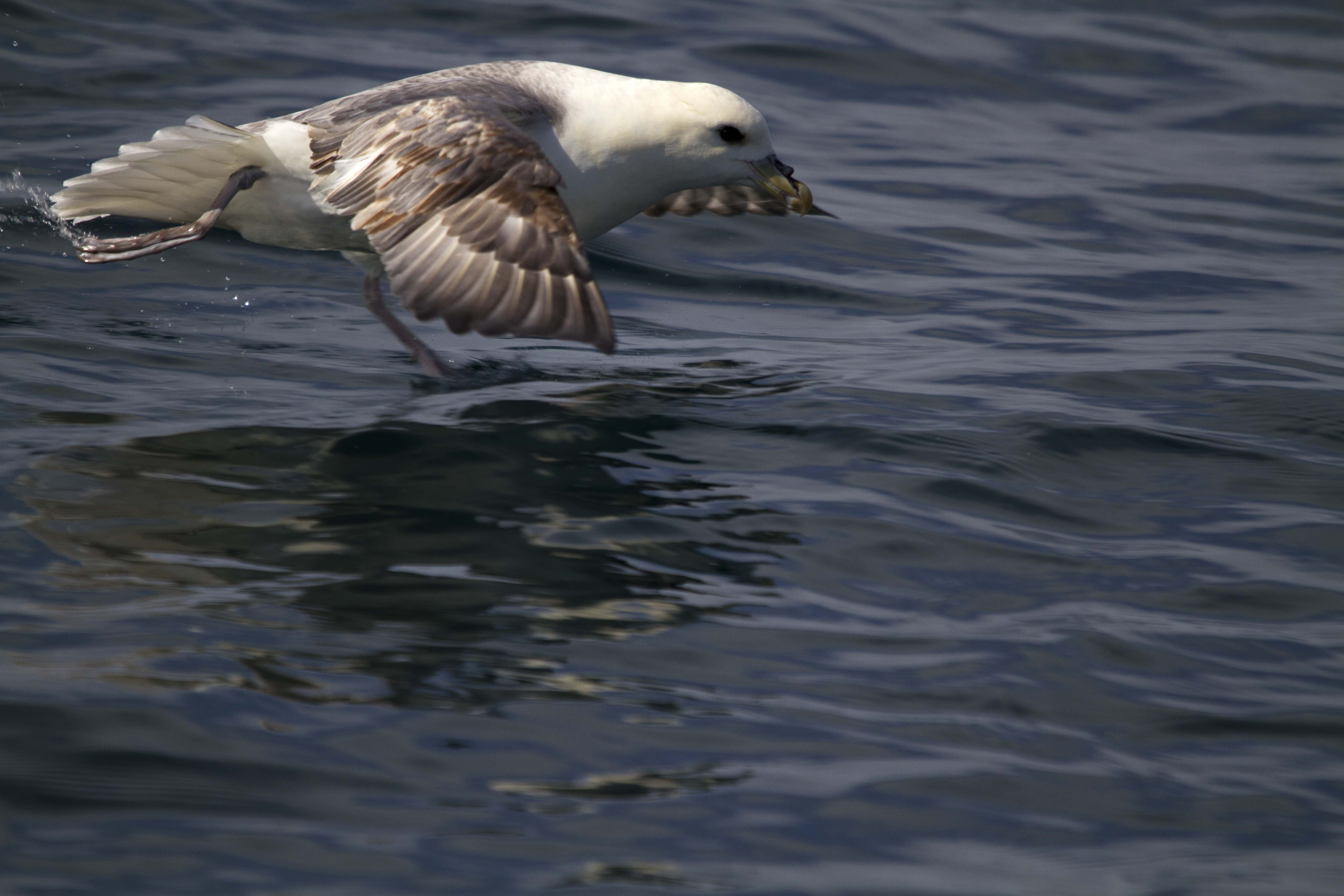 Lofoten now lies in our wake with the jagged peaks silhouetted against the horizon – as we sail north we are born upon the last warm tendrils of the gulf steam along the steep drop from shallow shelf water to the deep abyssal plain. This is the realm of whales, and in the Bleik Trench sperm whales gather each summer to feed upon the huge squid in the deep water. So of course we gathered there as well to see the whales! Unfortunately the first day of searching came up a complete zero, and the closest we came to seeing a whale was the many advertisements for “Hvalbif” (whale beef) in the restaurants of Andenes where we stayed for the night. And it seemed like this was going to be repeated the next day after eight hours of sailing along the shelf waters with nothing to keep us company but the many fulmars circling about the boat.
Until suddenly the call came: “Hvale!!!!”….

It was a single sperm whale logging on the surface but it was enough to make the hours worthwhile. The huge beast was rather indifferent about the appearance of Widdershins with its goggling crew and happily rolled about in the ocean swell before dipping towards the depths, raising its tail heading off to seek squid.
As the day was already growing long and we had many miles to sail we decided to call it quits and headed for sheltered waters and the inshore route to Tromsø. We are currently sipping hot chocolate amongst the hordes of tourists rugged up in several jumpers, patented Norwegian “tourist” beanies and hiking shoes …. Meanwhile the locals are strolling around in (very) short skirts, sandals and skimpy tops (ouch … I was doing research for the blog Léonie). I guess 10 degrees is the height of sultry summer weather here-abouts.
Midnight sun
 Lofoten is truly an amazing place. As we make our way through turquoise waters it is almost as if we are flying above the crystal clear ocean. Everywhere you look there are jagged peaks, each wearing a dusting of snow and Widdershins is constantly dwarfed by the sheer cliffs of the fjords. And what excites us most is that the landscape is by no means barren. Fish constantly break the surface in feeding schools and birds of a huge variety dive and swim about us … the anchorage where we lie now also has its own resident seal which gazes at us across the bay. If you’re brave enough to poke your head under the frigid water there are soft corals and what must be a spectacular underwater seascape beneath us. We haven’t been that brave yet, but we are working on our courage (helped along, as it happens, by a bottle of bootleg liquor acquired under the table in one of the rustic bar we dropped in). Perhaps we could squeeze a dive in?
 Another great thing about this part of the world is that there is plenty of sunlight . Perhaps too much. Right now our daily rhythm is a little messed up as we frequently sail well into the night, or go on long midnight walks. After a day sailing it is very tempting to anchor and then row to shore for a short walk – but it’s hard to tell when to call it a day when the sun won’t stop shining. There’s always the temptation to kindle a fire on the beach and gaze at the midnight sun or to scale one of the peaks to see the view. All this after-hours exploring leaves you a little weary and it’s sometimes hard to drag yourself out of bed…. Though a look outside the widow is generally enough to make us stir.
Lofoten
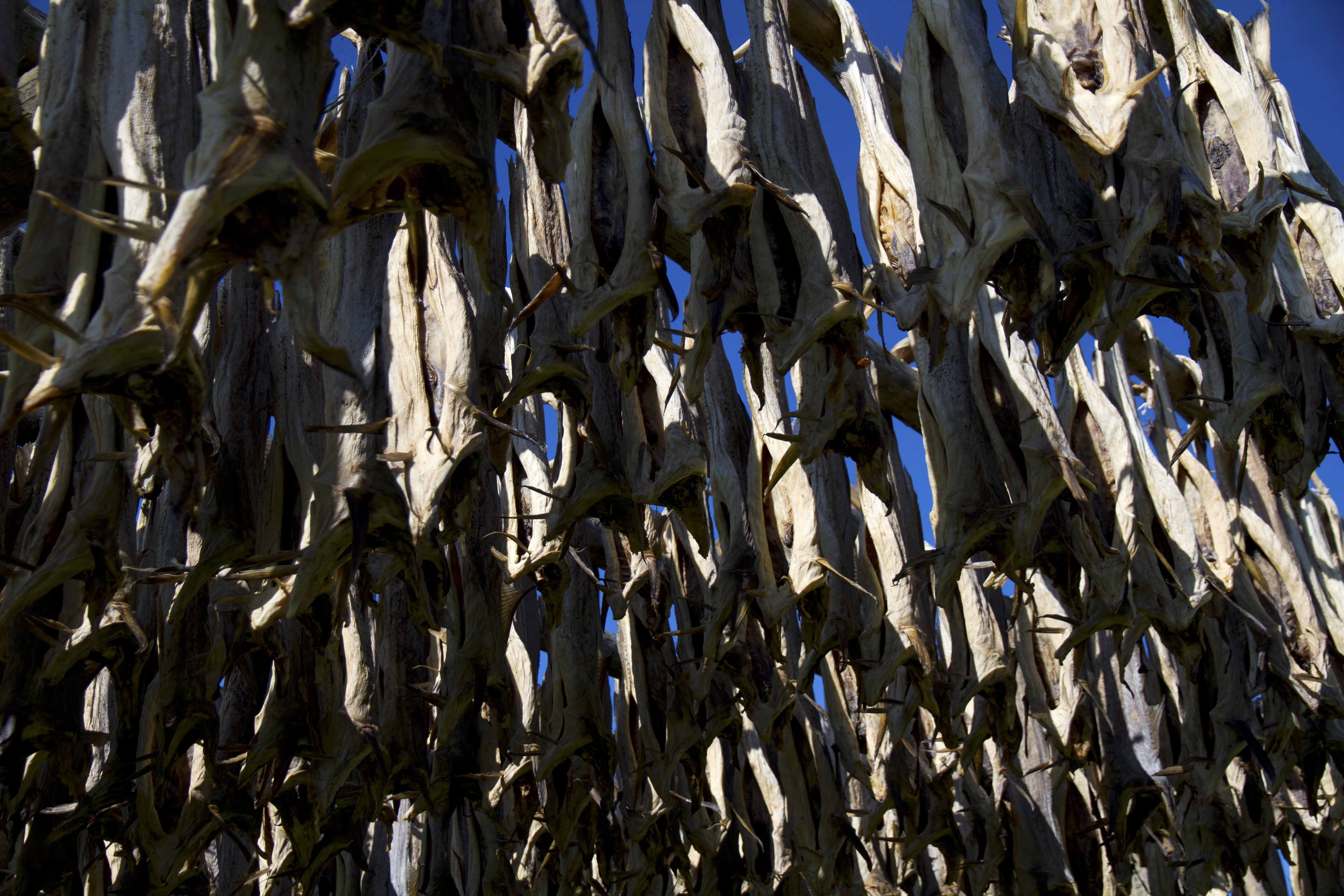
 Over the past two days we explored the remote southern islands of Røst and Værøy which form the very tip of the Lofoten Island chain. These rocky outcrops are the last vestiges of land before stone gives way to water and the land slips below turgid waters if the gulf stream. Here puffins, razorbills, kittiwakes, guillemots and sea eagles flock to the nesting cliffs and buzz overhead like bush flies in the Australian outback. People are somewhat less common and the harbours here retain some of the outpost feeling of a fishing town isolated from the rest of the world with not a care except the next catch of cod. And speaking of cod … you can still smell these towns long before you are amongst the picturesque houses – cod hang in endless rows drying on the sun and assuring all approaching that cod is the heart and soul of life in Lofoten. Our first night in the islands was spent tied up a mere ten paces from thousands of cod carcasses gently swaying in the wind … Widdershins is starting to absorb the aroma ….
 Right now we have moved on from the southern islands, crossing the ominous Maelstrom with the reputation of a swirling eddy of water with a penchant for dragging boats down to the watery depths. Being the brave seafarers we are, we charged past the Maelstrom a mere hairs breadth from the swirling waters of death … well we could see them anyway … or we could see where it was still … in the distance. Now we sit with the warm sun on our back relaxing with a cup of coffee and recuperating after a steep climb to a mountain overlooking the town of Reine. The view was spectacular with the crystal clear waters of Lofoten lapping against the rugged cliffs below and the jagged snow-capped peaks towering above – it is a landscape that is unique to this fantastic part of the world.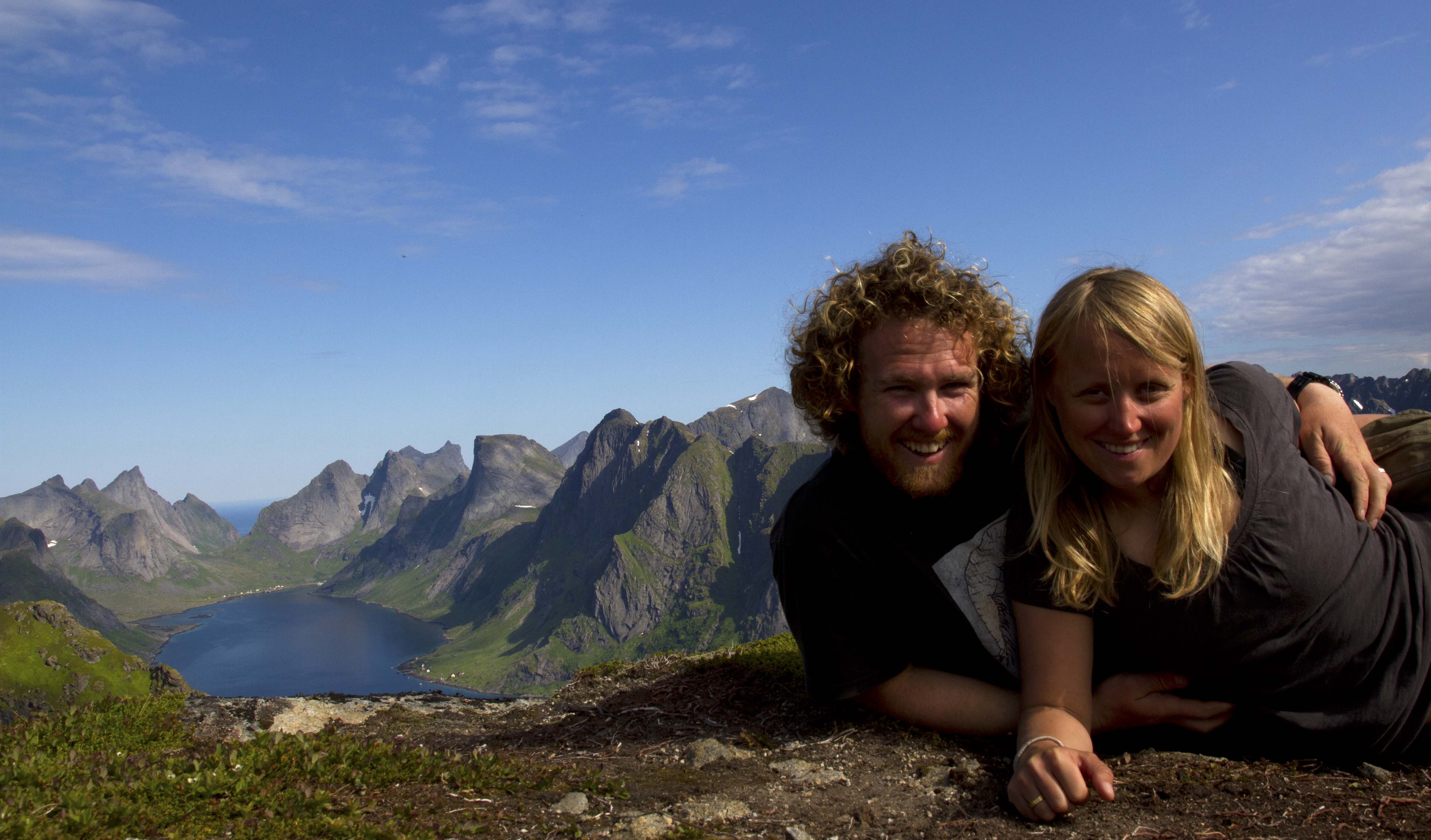
North of the night

Over the past few days we crossed a lot of water as we wish to spend at least two weeks exploring the beautiful islands of Lofoten. To make quicker progress we decided to do a couple of over-night trips…. well, over-“night” is a bit an exaggeration this far north. In reality it never gets dark at all. Although we have not seen the midnight sun yet (too cloudy), the light dims only a little bit around 1:00 am, before it gets bright again.
As you can imagine sailing 24 hours non-stop can be hard going at times. There is always one person on watch (making sure we don’t run into rocks or miss seeing whales) and in the long night time hours this lasts for about four hours …. any longer and you find yourself nodding off. Meanwhile the other of us is snug and warm in bed trying to snatch a few hours of rest before once again suiting up and facing the elements.
I had just finished my last watch and blissfully fallen asleep, when at about 3:00 am Patrick banged on the cabin door and announced that he needed me on deck urgently. Sluggishly I peeked out of the cabin only to be greeted by a gush of cold water on my head and a broadly grinning Patrick who declared that this was Neptune’s kiss. After some well-directed curses I grumpily crawled out and he explained that we were just about to cross the Arctic Circle. Before we crossed I promptly secured my revenge in the form of a glass of water on Patricks head (after all, it’s his first crossing on a boat as well), then we raised a toast with some miniature gin bottles. At least we thought it was gin until we downed it. Turns out it was some horrible sweet gin essence probably meant for cooking, yuck!

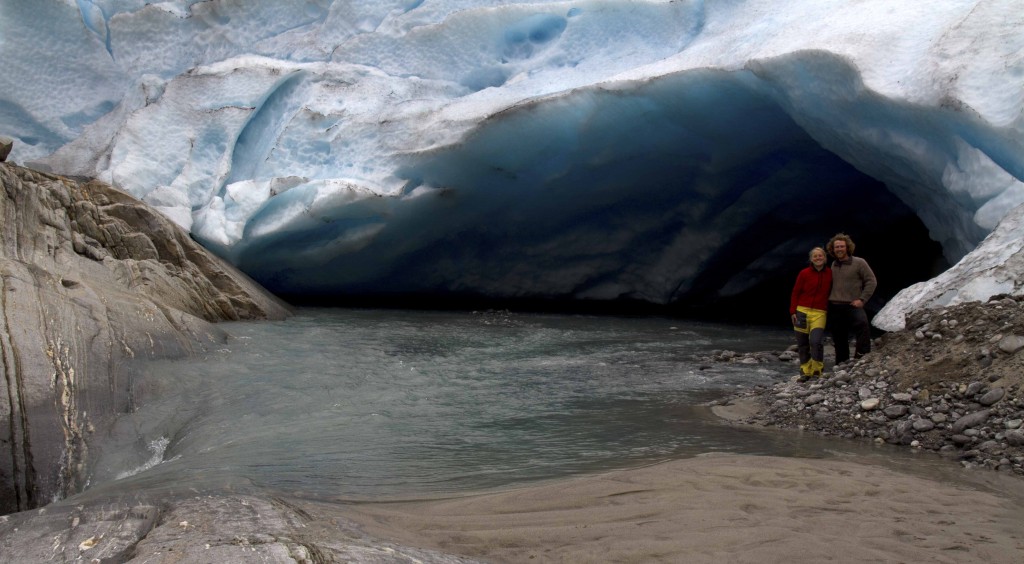
Our first stop north of the circle was in one of the fjords. While it was once again overcast, the gaps on the cloud allowed tantalising glimpses of jagged peaks and white ice caps descending in an icy turmoil down the steep sides before grinding to a halt only meters above the water. We eagerly climbed up over spectacular rock formations where multi-coloured rock twisted in many layers and bore the scars of the glaciers passage. And only a short distance away the glaciers terminal face rose above us with the mouth of a cave where water relentlessly dropped down to form an impressive waterfall that tumbled down into a crystal-clear lake below.
Now we’re again further north, only a few hours from Bodø, where we will refill our food supplies to prepare ourselves for the journey across the seas to Lofoten. Right now Patrick is cooking his latest catch of fish for a delicious dinner. Seems Neptune appreciated our toast and rewarded us with a beautiful cod (though he did take my lure in payment…).
Bountiful seas
 As we head further North the degrees of latitude steadily increase and the degrees of temperature go sharply the other direction. Previously the steep slopes of the Norwegian fjords plunged to the sea with green foliage born of birches, spruce and pines; now we are seeing barren shores facing the battering of the weather and cold. But this is where things begin to get interesting….
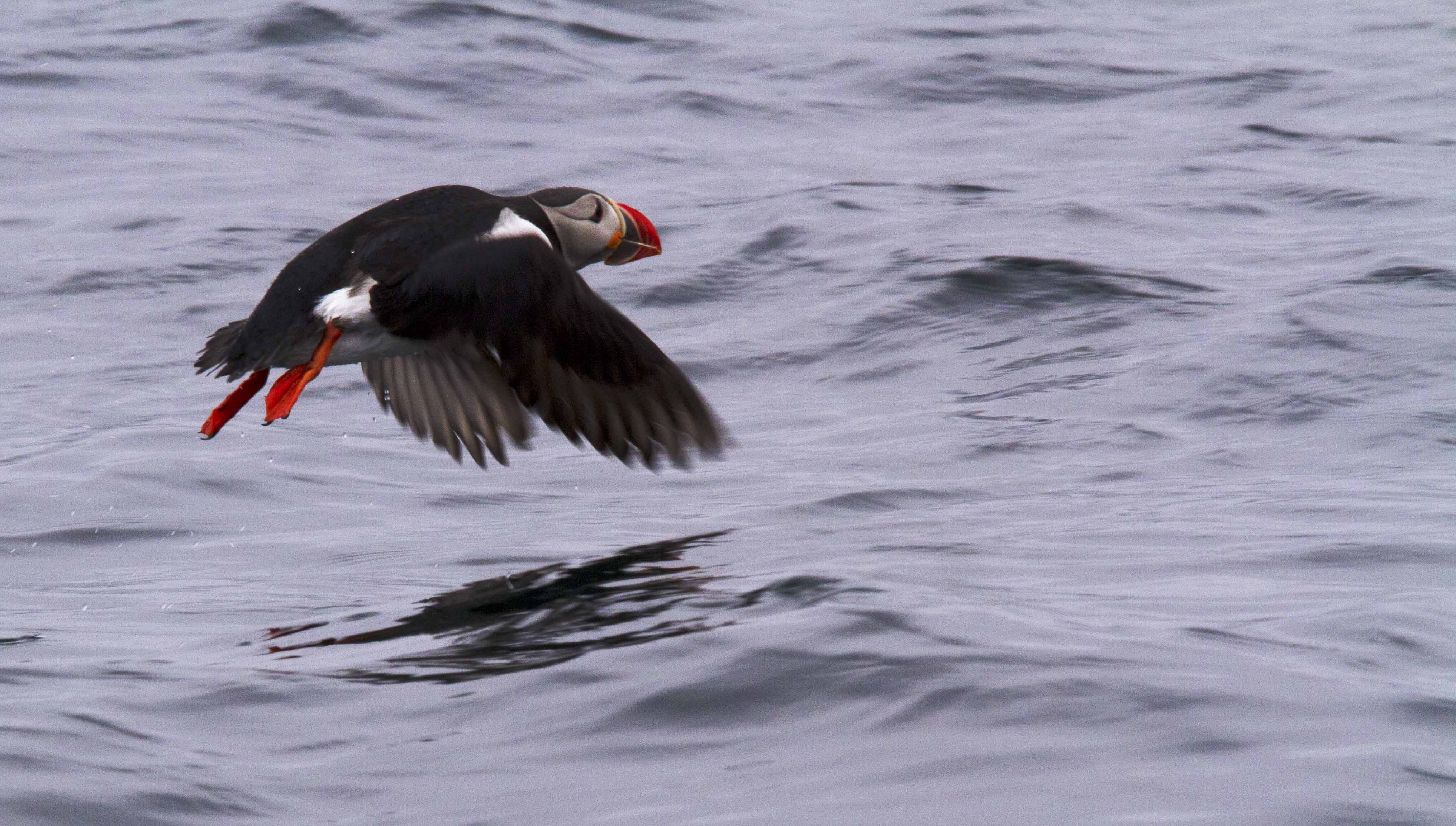
A few days ago in an Arctic fog we were blown towards the shore of the southern-most puffin colony in Norway – the isle of Runde. At 62°N these islands are at the same latitude of their southern counterparts the South Shetland Islands – adjacent to the Antarctic Peninsula. Here in Runde it is a far cry from the glaciers and extreme conditions of Antarctica but we have still crossed a boundary on the trip North. The south-western coast of Runde in composed of plunging cliffs that hold a startling arrange of nesting sea-bird life. Previously our journey along the Norwegian coast was in the company of gulls, a smattering of terns, the occasional eider duck … suddenly we were surrounded by birds of a dazzling diversity. Gannets, fulmars, kittiwakes, puffins, razorbills, shags and guillemots suddenly soared overhead. Here we climbed to the cliffs and sat and watched the puffins flap furiously through the fog towards their nests amidst the rocks, and craned our necks to see the graceful flight of the Gannets…. But it wasn’t just above that the wildlife had suddenly appeared. As we sailed on (again in mist) occasional schools of fish broke the slick surface, and eventually something bigger emerged from the depths.
 With a high pitched squeak long-finned pilot whales where suddenly porpoising all around Widdershins chasing schools of mackerel. A pod of over 20 whales herded fish around us for the better part of an hour, briefly pausing to spy-hop – raising their heads out of the water to peer at these strange intruders to their watery world. Eventually we left them to their feeding, but not before securing some whale left-overs for ourselves…. Mackerel for lunch!
Posted in Norway, South Shetland Islands
Tagged Eider Duck, Gannet, Guillemot, Kittiwake, Long-finned Pilot Whale, Mackerel, Northern Fulmar, Puffin, Razorbill
1 Comment
Sailing back in time
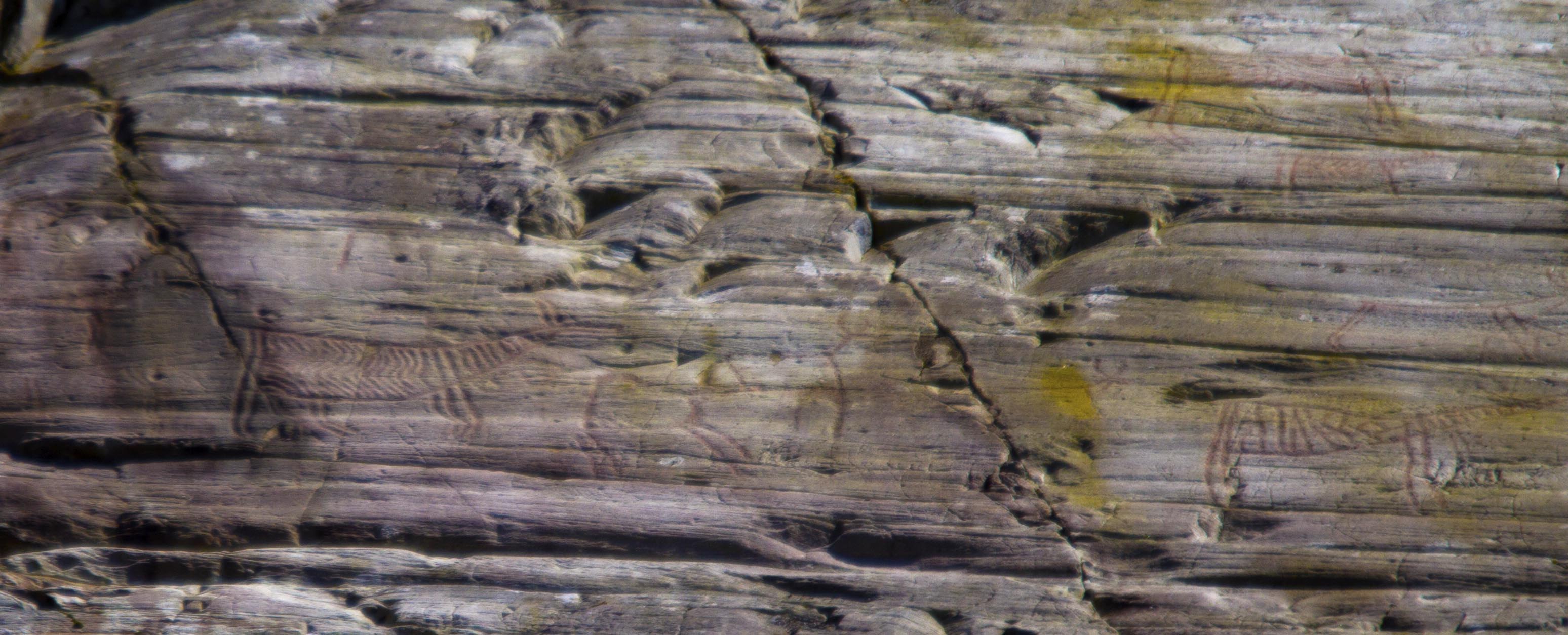 Today was all about history: starting with the search for some early stone age carvings, which were supposed to be on the way to a medieval monastery. The carvings turned out to be quite difficult to find, since we only had a vague description from a lonely planet guide book, which told us which tourist operator could take you there, but gave no directions otherwise. Furthermore we didn’t even know what exactly we were supposed to be looking for. But after about two hours of chugging along the coast and examining every possible rock with the binoculars, we were lucky enough to actually find the carvings!
  Seems like not too much has changed in Norway over the past few thousand years: We could make out a ship, lots of deer and a few sheep (although the latter might also depict zebras … ).

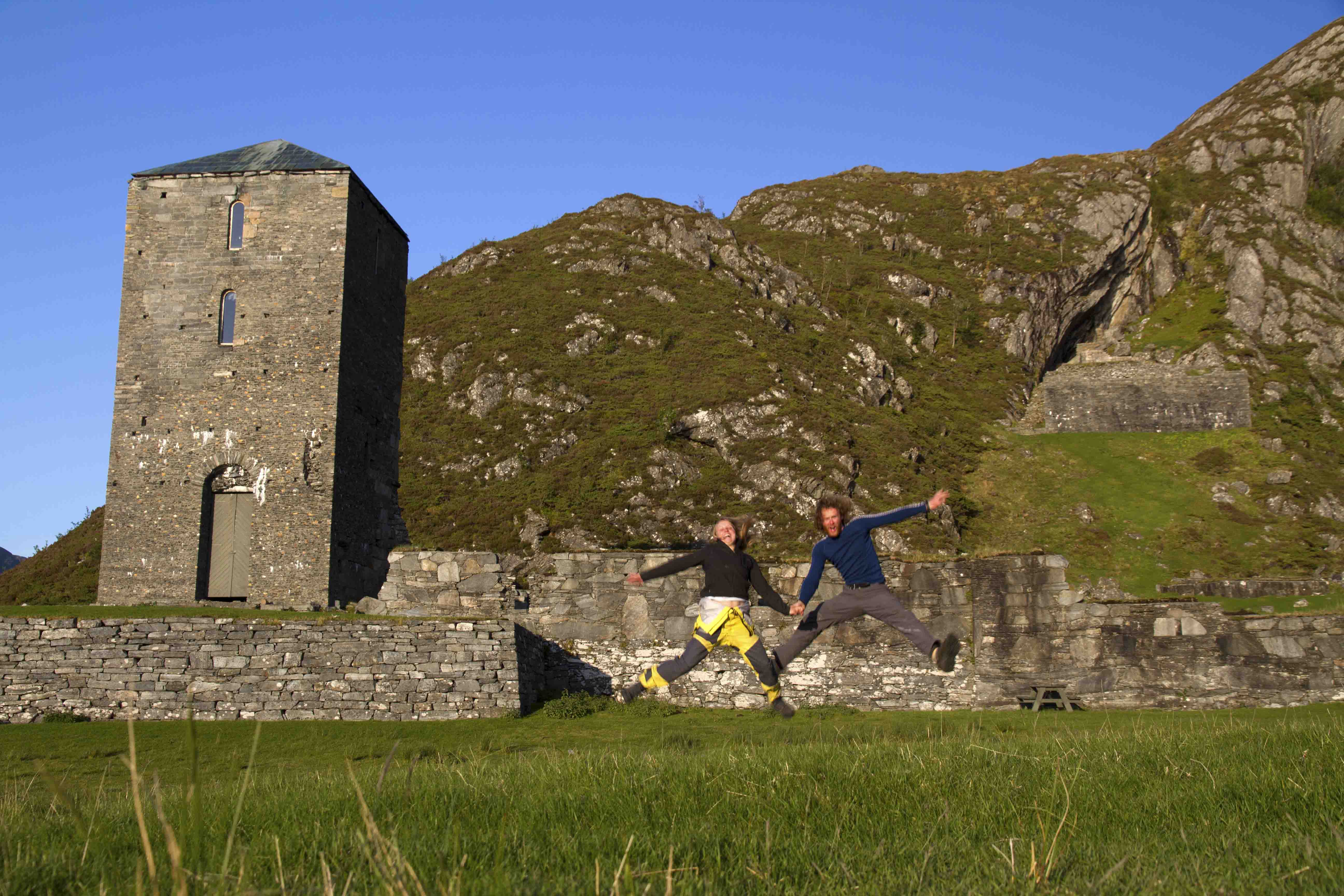
After a beautiful day we tied up at island of Selja, in front of the ruins of a monastery from the early 12th century. High above the scattered remains of the monastery there was a deep cave, where according to legend a Irish princess took refuge from a band of marauding Vikings. Devine providence proceeded to collapse the cave on head to save her from a fate presumably worse than death. This resulted in her becoming a martyr and a saint. However, we discovered that Vikings were not the only killers in the area – along the steep slope we found a more subtle assassin: Pinguicula vulgaris (no relation to penguins). These little carnivorous plants lure passing insects onto their leaves where they are snared on the sticky surface to be digested at the plants leisure.
Posted in Norway
Leave a comment